2026-10-07 · Dale Whitaker
Metal vs Tile Roofing for Coastal Florida Homes: Salt Air and Storm Durability
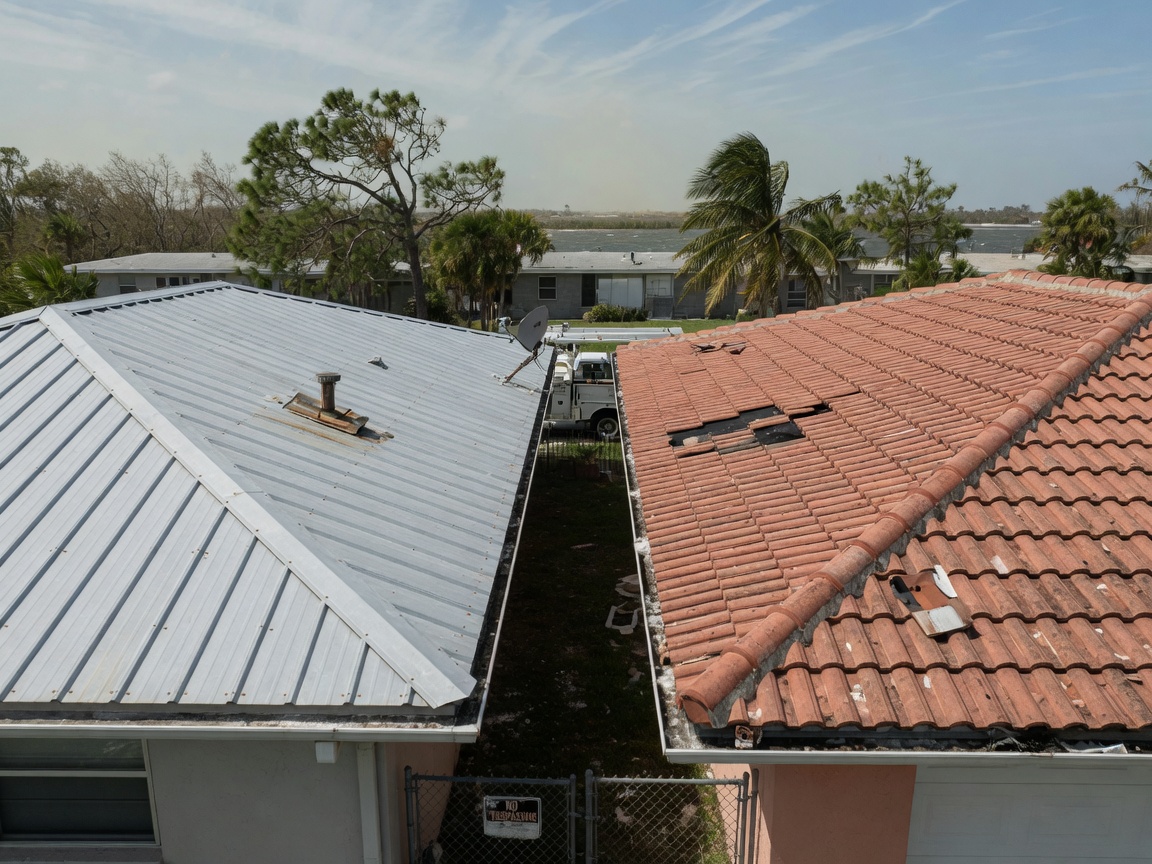
For most Melbourne homes, metal roofing is the better fit for salt air and wind-driven rain when it is the right alloy and fastened correctly, while concrete tile wins on heat performance and long-term curb appeal. Both can last 40–50 years in Brevard County, but they fail in different ways. Metal fails at fasteners, seams and coatings; tile fails at underlayment, broken pieces and weak attachment. Here is how to decide for a barrier-island bungalow in Indialantic versus a stucco home in West Melbourne.
How Salt Air Treats Each Material
Our humid subtropical climate is moderated by the Atlantic, which means constant moisture and salt carried inland on the breeze. Homes in Melbourne Beach, Indialantic and Satellite Beach see the heaviest exposure, and even Downtown Melbourne gets a salt film on windy days. This is where material choice matters most.
- Aluminum panels do not rust and are the safest pick within about a mile of the ocean. Expect $10–$16 per square foot installed.
- Galvalume or coated steel (24–26 gauge) performs well inland, but cut edges and scratches can start corrosion near the beach if the coating is compromised.
- Copper and zinc resist corrosion but cost far more, often $20+ per square foot.
- Concrete tile is unaffected by salt itself, but the metal flashing, nails and valley pieces under it are not. Stainless or heavily coated accessories matter.
Dissimilar metals are a quiet culprit: a steel fastener on an aluminum panel can corrode within a few years. A good installer matches every component, not just the panel.
Wind and Hurricane Performance
Brevard County sits in a high-velocity wind zone for much of the coast, so uplift resistance is the real test. Standing seam metal with concealed clips, installed over a properly nailed deck, handles sustained wind very well because the panels are light and interlock along the full length. Tile is heavy, around 9–12 pounds per square foot, which helps hold it down but turns loose pieces into projectiles when attachment is poor.
The difference is almost always in installation. Older tile roofs in Eau Gallie and Palm Bay were often mortar-set, and that mortar degrades over decades. Modern code calls for foam adhesive or mechanical fasteners and a secondary water barrier. Metal needs correct clip spacing, especially at eaves, ridges and corners where uplift peaks.
Either system can earn meaningful insurance credits when documented. Our guide to Florida building code and wind mitigation explains what inspectors look for, and a roof inspection and wind mitigation assessment records the details that drive your premium.