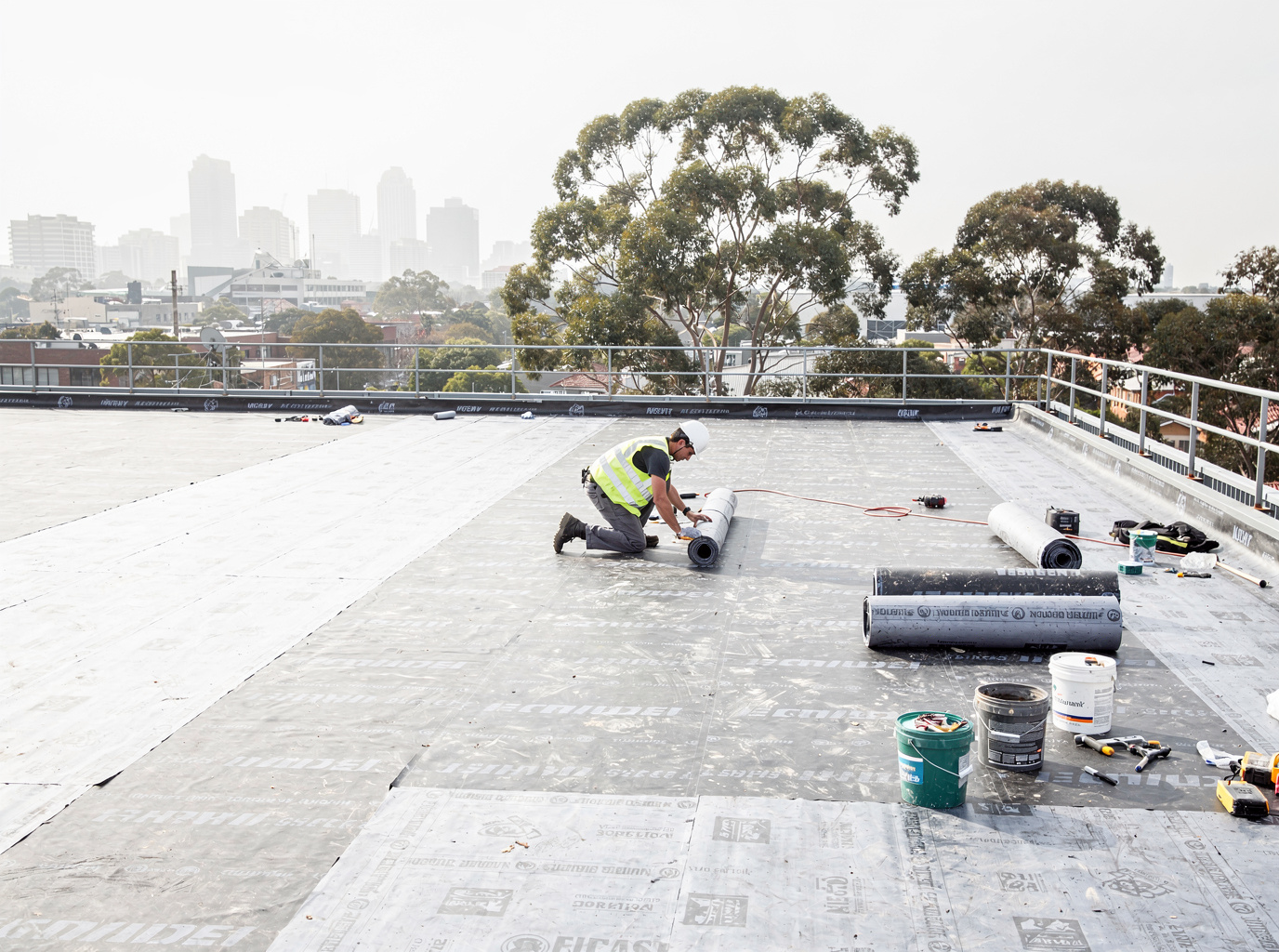
Flat and low-slope roofs are the norm on Brevard County's retail strips, office parks, medical suites, and light industrial buildings, from the commercial corridors near Melbourne Square Mall to the older storefronts in Downtown Melbourne and the Eau Gallie Arts District. The humid subtropical climate, moderated by the Atlantic, means a flat roof here faces long UV exposure, daily summer thunderstorms, and salt-laden air the closer you get to Indialantic, Satellite Beach, and Melbourne Beach. The common systems we work with are single-ply TPO and PVC, modified bitumen, built-up roofing, and fluid-applied or silicone coatings over a sound substrate. Each behaves differently in heat, ponding water, and wind uplift, so the right choice depends on the existing deck, the insulation, and what the building does underneath it.
Ponding water is the most common problem we see. Water standing for more than a day or so after a storm accelerates membrane aging, grows algae, and exposes weak seams. In Florida it is often caused by deck deflection, clogged scuppers, or drains set too high, not just a worn membrane. Before quoting a replacement, we check drain locations, look for soft decking, and probe for wet insulation, because trapped moisture under a membrane is easy to miss and expensive to ignore. Moisture scans and core samples are standard for older roofs in Palm Bay, West Melbourne, and Cocoa where several re-covers may already be stacked on the deck. Layering a new membrane over wet insulation just buries the problem.
Wind is the other deciding factor. Brevard County sits in a high-velocity wind region, and a commercial re-roof is typically held to current Florida Building Code requirements for wind uplift, fastening or adhesion patterns, perimeter and corner reinforcement, and edge metal. Perimeter and corners take the highest suction, so edge flashing, coping, and termination bars are where storm failures usually start. Near the coast, fasteners, edge metal, and rooftop unit curbs corrode faster, so we specify coated or stainless components where it matters. Permit and code requirements for your specific building are confirmed through the local building department, and we build the scope around what the inspector will need to see, not just what looks good at handover.
Repair, restoration, or replacement is a real decision, not a sales line. If the membrane is sound but seams, penetrations, or flashings are failing, targeted repair or a restoration coating can extend service life at a fraction of the cost. If insulation is saturated across large areas, the deck is deteriorated, or the roof has been patched repeatedly, replacement is the honest answer. We walk the roof with you, show photos of what we find, and explain both options. For urgent leaks after a storm, our 24/7 Emergency Dispatch can get a crew out to tarp and stabilize the roof, then plan the permanent fix once the building is dry.
Flat Roof Material Comparison for Brevard County
TPO is a white, reflective single-ply that handles Florida heat well and is popular for cost-conscious re-roofs when seams are heat-welded properly. PVC costs more but resists grease, chemicals, and ponding better, which suits restaurants and some food-service buildings. Modified bitumen is tough and repairable, a good fit where foot traffic from HVAC service is heavy. Silicone coatings suit roofs with sound substrates and ponding concerns, since silicone tolerates standing water, but they will not fix wet insulation or structural problems.
Storm Season Guidance for Building Owners
Before June, have drains, scuppers, and gutters cleared, check edge metal and rooftop equipment for loose fasteners, and photograph the roof condition for your records. After a major storm, look for lifted seams, displaced coping, debris, and interior ceiling stains. Do not let unqualified crews walk a wet membrane. If you see active leaking, call our emergency line, and document the damage before any temporary repairs so insurance conversations go smoothly.
Technician insight
In Melbourne, the thing that catches most owners out with commercial flat roofs is wet insulation hiding under a membrane that looks fine. With our summer downpours and salt air near Indialantic and Satellite Beach, small seam or flashing leaks can soak the insulation for years before a ceiling stain shows up. I always check moisture before agreeing to coat or re-cover, because sealing water in is what turns a repair into a failure.
Ponding Roof on a West Melbourne Retail Strip
A tenant reported recurring ceiling stains after heavy afternoon storms, and the owner had paid for several patches. We found a sagging section with standing water and saturated insulation around a clogged, poorly placed drain. We cut out and replaced the wet insulation, added tapered insulation and a new drain, and installed a new membrane with reinforced perimeter details. The roof now drains after storms and the stains have stopped.
Commercial Flat Roof Systems Services We Offer
✓Commercial Flat Roof Replacement
Full tear-off or code-compliant re-cover with new insulation, membrane, and edge metal. Done when moisture surveys show the old system is past saving.
✓TPO Roof Installation
Heat-welded white membrane that reflects Florida sun and cuts cooling load. A cost-effective choice for retail and office buildings in Melbourne and West Melbourne.
✓PVC Roofing Systems
Chemical- and grease-resistant membrane for restaurants and buildings with heavy rooftop exhaust. Strong seams hold up well where water ponds.
✓Modified Bitumen Roofing
Multi-layer torch or cold-applied system that stands up to foot traffic and is easy to patch later. Good for buildings with frequent rooftop equipment service.
✓Flat Roof Coating and Restoration
Silicone or acrylic coatings applied over sound roofs to seal seams and extend life without a tear-off. Often the lowest-cost way to stop minor leaks.
✓Emergency Commercial Roof Repair
Fast tarping, leak isolation, and temporary repairs after storms or sudden failures, with 24/7 Emergency Dispatch to limit interior damage.
✓Ponding Water and Drainage Correction
New drains, scuppers, tapered insulation, and crickets to move water off the roof. Prevents the premature membrane failure standing water causes.
✓Roof Leak Detection and Moisture Surveys
Infrared and core sampling to find wet insulation and hidden leak paths before you commit to a repair or replacement.
Commercial Flat Roof Systems Cost in Melbourne, FL
| Service | Typical Range | What Affects It |
|---|---|---|
| Roof inspection and moisture assessment | Free–$600 | Basic walk is often free; infrared or core sampling on larger roofs adds cost. |
| Targeted leak repair | $300–$1,500 | Depends on access, number of penetrations or seams involved, and membrane type. |
| Silicone or acrylic restoration coating | $2–$5 per sq ft | Needs a sound substrate; seam repair, cleaning, and coating thickness change the price. |
| TPO or modified bitumen re-cover | $5–$10 per sq ft | Depends on existing layers, insulation needs, and wind-uplift requirements. |
| Full tear-off and replacement | $7–$14 per sq ft | Wet insulation, deck repair, tapered drainage, and edge metal upgrades move it up. |
Ranges are typical for Melbourne, FL and confirmed with an exact written quote before any work starts.
How it works
- 1
Roof Walk and Moisture Assessment
We inspect the membrane, seams, flashings, drains, and rooftop units, and check for wet insulation using scans or core samples where needed.
- 2
Options and Upfront Quote
You get a written scope comparing repair, restoration, and replacement, with materials, drainage changes, and edge metal spelled out clearly.
- 3
Permitting and Scheduling
We handle permit paperwork where required and plan work around your business hours, access, and Brevard County's afternoon storm pattern.
- 4
Installation and Weather Protection
Crews tear off only what can be dried in each day, install insulation and membrane to spec, and detail penetrations, curbs, and perimeters carefully.
- 5
Final Walkthrough
We review the finished roof with you, clean up debris, and provide photos of key details so you have a record of the work.
Pricing
Commercial flat roof pricing is driven mostly by square footage, system type, tear-off versus re-cover, and how much wet insulation or deck repair turns up. We give upfront written quotes after a roof walk, and we flag any possible add-ons before work starts.